If you’ve ever felt a sharp, nagging pain at the base of your thumb every time you grip a coffee cup, lift your child, or even text on your phone, you may be dealing with more than just a strained muscle. De Quervain’s Tenosynovitis is one of the most common causes of wrist and thumb pain seen in orthopedic clinics today, yet it remains widely misunderstood by patients who often dismiss it as “just a sprain.” As an orthopedic surgeons in Vashi, Navi Mumbai, I see this condition regularly across all age groups, and early recognition makes all the difference in how quickly and completely patients recover.
What Exactly Is De Quervain’s Tenosynovitis?
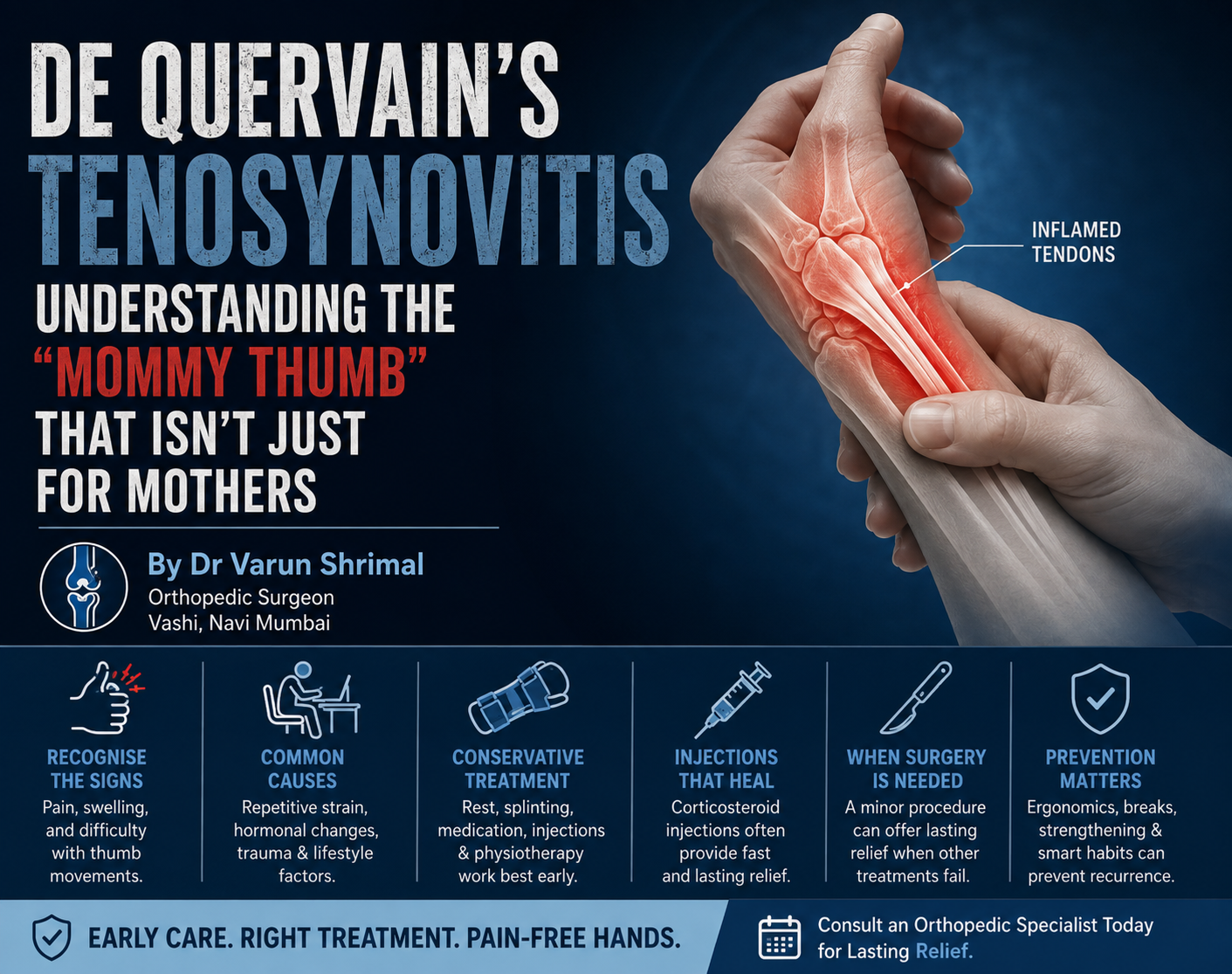
De Quervain’s Tenosynovitis is an inflammatory condition affecting the tendons on the thumb side of the wrist — specifically the abductor pollicis longus and extensor pollicis brevis tendons. These two tendons pass through a narrow fibrous tunnel called the first dorsal compartment. When this tunnel becomes inflamed or thickened, it restricts smooth tendon movement, resulting in pain, swelling and a distinct “catching” sensation whenever the thumb or wrist is moved.
The condition is often nicknamed “mommy thumb” or “washerwoman’s sprain,” because it frequently affects new mothers who repeatedly lift infants with an outstretched thumb. However, this label is misleading — the condition affects a wide range of people, including office workers, gamers, tailors, musicians, and anyone whose daily activities involve repetitive gripping, pinching, or twisting motions of the wrist.
Recognising the Symptoms
Patients typically report:
- Pain along the thumb side of the wrist, which may radiate up the forearm
- Swelling near the base of the thumb
- Difficulty gripping objects or making a fist
- A “sticking” or “snapping” feeling when moving the thumb
- Increased discomfort with activities like pinching, twisting jar lids, or lifting
A simple clinical test called the Finkelstein test is often used for diagnosis. In this test, the patient tucks the thumb into the palm and bends the wrist toward the little finger. Sharp pain during this movement is a strong indicator of De Quervain’s Tenosynovitis.
What Causes It?
While repetitive strain is the most common trigger, several factors contribute to the development of this condition:
- Repetitive hand and wrist movements — particularly those involving pinching or grasping
- Hormonal changes — pregnancy and postpartum periods increase susceptibility due to fluid retention and ligament laxity
- Direct trauma — a fall or injury to the wrist can trigger inflammation
- Inflammatory conditions — rheumatoid arthritis and other systemic inflammatory diseases can predispose patients
- Occupational and lifestyle factors — prolonged smartphone use, typing, and manual labor are increasingly recognized contributors in today’s digital-first world
Treatment Options: From Conservative Care to Surgery
The good news is that De Quervain’s Tenosynovitis is highly treatable, especially when addressed early.
Conservative management is usually the first line of treatment and includes:
- Rest and activity modification to avoid aggravating movements
- Thumb spica splinting, which immobilises the wrist and thumb to allow the inflamed tendons to heal
- NSAIDs to reduce pain and inflammation
- Corticosteroid injections, which have shown excellent success rates in resolving symptoms, often within a few weeks
- Physiotherapy and stretching exercises, once acute inflammation subsides, to restore strength and flexibility
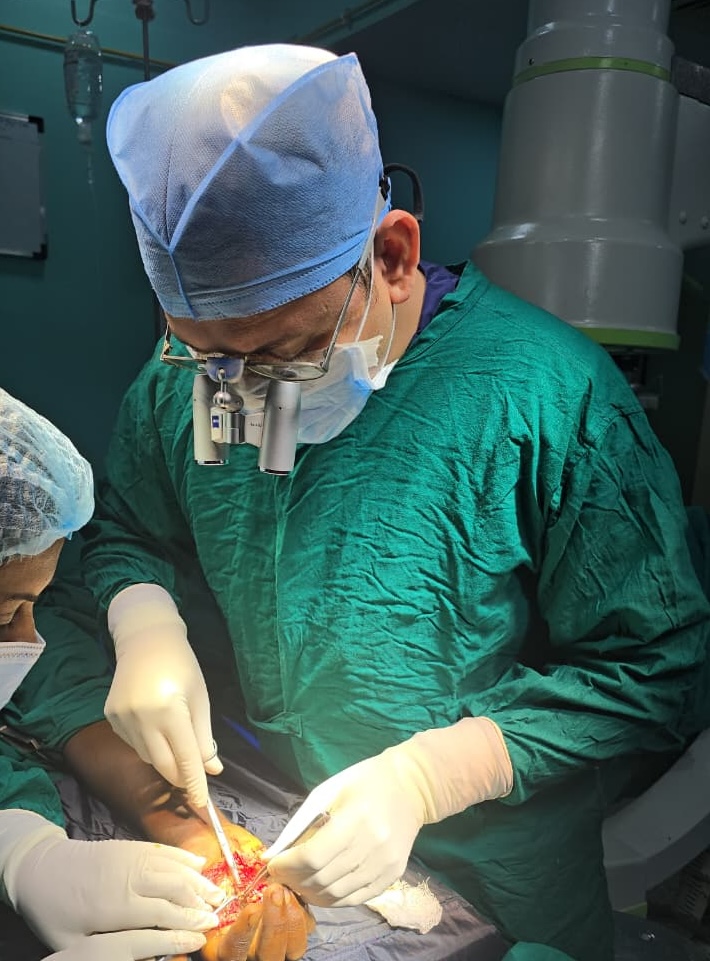
For patients who do not respond to conservative measures after several months, surgical release of the first dorsal compartment may be recommended. This is a relatively minor outpatient procedure that involves releasing the tight tunnel to relieve pressure on the tendons, with most patients experiencing significant relief and a quick return to normal activity.
Prevention Matters
For those at risk — new parents, professionals who perform repetitive hand tasks, or individuals recovering from a previous episode — a few preventive habits can make a real difference:
- Taking frequent breaks during repetitive tasks
- Using ergonomic tools and proper lifting techniques
- Strengthening and stretching the wrist and forearm muscles regularly
- Avoiding prolonged thumb-intensive phone use
When to See a Specialist
Persistent thumb or wrist pain that does not improve with rest, or worsens with daily activity, should not be ignored. Early diagnosis and intervention not only relieve discomfort faster but also prevent the condition from becoming chronic or affecting hand function long-term.
If you’re experiencing symptoms suggestive of De Quervain’s Tenosynovitis, consulting an orthopedic specialist for a proper clinical evaluation is the best first step toward recovery. If you’re searching for the best orthopedic surgeon in Vashi, Navi Mumbai, for an accurate diagnosis and a personalised treatment plan, book a consultation today and take the first step toward pain-free hand function.



![5 Warning Signs Your Child May Need an Orthopedic Doctor]](https://drvarunshrimal.com/wp-content/uploads/2026/02/5-Warning-Signs-Your-Child-May-Need-an-Orthopedic-Doctor.png)