Shoulder pain that slowly turns into stiffness and restricted movement can be frustrating. Many people initially ignore it, assuming it is just muscle strain or fatigue. However, when the shoulder gradually becomes difficult to move, it could be a condition known as Frozen Shoulder, medically called Adhesive Capsulitis.
Frozen shoulder affects daily activities such as lifting the arm, reaching overhead, combing hair, or even wearing clothes. Understanding the causes, symptoms, and treatment options can help individuals seek timely care and prevent long-term stiffness.
What is Frozen Shoulder?
Frozen shoulder is a condition where the shoulder joint becomes stiff and painful due to inflammation and thickening of the capsule surrounding the joint. Over time, the tissues tighten and form adhesions, which restrict movement and make even simple tasks difficult.
The condition usually develops gradually and progresses through different stages, starting with pain and eventually leading to severe stiffness.
Common Symptoms of Frozen Shoulder
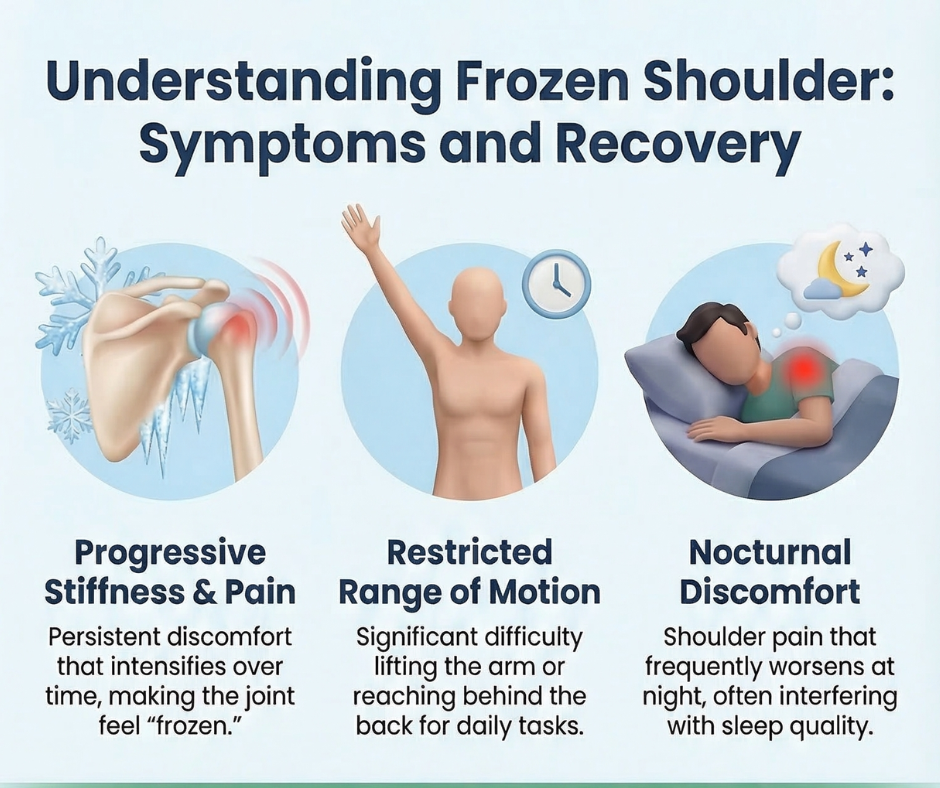
Frozen shoulder often begins with mild discomfort but gradually worsens. Some common symptoms include:
- Persistent shoulder pain
- Stiffness that increases over time
- Difficulty lifting the arm or reaching behind the back
- Pain that worsens at night
- Reduced range of shoulder movement
- Difficulty performing daily tasks such as dressing or grooming
In many cases, people notice that the shoulder becomes progressively harder to move, even when the pain reduces.
What Causes Frozen Shoulder?
The exact cause of frozen shoulder is not always clear, but several factors can increase the risk of developing the condition.
1. Shoulder Injury or Surgery
After shoulder injuries, fractures, or surgeries, people often limit shoulder movement due to pain. This lack of movement can lead to stiffness and eventually frozen shoulder.
2. Prolonged Immobilisation
When the shoulder is kept immobile for a long time, such as after wearing a sling or avoiding movement, the joint capsule can tighten and restrict mobility.
3. Diabetes
People with diabetes have a higher risk of developing frozen shoulder. Changes in connective tissues and inflammation may contribute to stiffness in the joint.
4. Other Medical Conditions
Certain health conditions increase the chances of frozen shoulder, including:
- Thyroid disorders
- Parkinson’s disease
- Heart disease
5. Age-related Degeneration
As people age, joint tissues become less flexible, which may increase the risk of stiffness in the shoulder.
Which Age Group is Most Affected?
Frozen shoulder is most commonly seen in people between 40 and 60 years of age. It is also slightly more common in women than men.
This age group is more prone because joint tissues gradually lose flexibility, and underlying health conditions like diabetes or hormonal changes may contribute to inflammation in the shoulder joint.
How Is Frozen Shoulder Diagnosed?
Diagnosis usually begins with a clinical examination by an orthopedic doctor. The doctor will assess the shoulder’s range of motion and ask about pain, stiffness, and medical history.
During the examination, both active movement (when the patient moves the arm) and passive movement (when the doctor moves the arm) are evaluated. Limited movement in both directions often suggests frozen shoulder.
In some cases, imaging tests such as X-rays, ultrasound, or MRI scans may be recommended to rule out other conditions like fractures, rotator cuff tears, or arthritis.
Remedies and Treatment Options
Treatment for frozen shoulder focuses on reducing pain and restoring shoulder mobility. Common approaches include:
Physiotherapy
Stretching and strengthening exercises are essential to gradually improve the range of motion in the shoulder.
Medications
Pain-relieving medications and anti-inflammatory drugs can help reduce discomfort during the early stages.
Corticosteroid Injections
In some cases, injections may be recommended to reduce inflammation and improve movement.

When Should You See a Doctor?
Many people delay treatment thinking the pain will go away on its own. However, medical evaluation is recommended if:
- Shoulder pain lasts for several weeks
- Stiffness is progressively worsening
- Movement becomes restricted
- Pain interferes with sleep or daily activities
Early diagnosis allows treatment to begin sooner and prevents long-term stiffness.
How Can Frozen Shoulder Be Prevented?
While not all cases can be prevented, certain habits can reduce the risk:
- Keep the shoulder active with regular movement and exercise
- Avoid keeping the shoulder immobilised for long periods after injuries
- Follow proper physiotherapy after shoulder surgery or trauma
- Manage medical conditions such as diabetes effectively
- Maintain good posture during work and daily activities
Regular stretching and maintaining shoulder mobility can help prevent stiffness.
Final Thoughts
Frozen shoulder may start with mild pain but can gradually restrict shoulder movement if ignored. Early diagnosis and proper treatment can help restore mobility and prevent prolonged discomfort.
If you experience persistent shoulder pain or stiffness, consulting an orthopaedic specialist can help identify the problem early and guide you toward effective treatment.
Healthy shoulders support comfortable movement and an active lifestyle.
![5 Warning Signs Your Child May Need an Orthopedic Doctor]](https://drvarunshrimal.com/wp-content/uploads/2026/02/5-Warning-Signs-Your-Child-May-Need-an-Orthopedic-Doctor.png)