
A wrist injury can happen during everyday activities, sports, exercise or an accidental fall. Sometimes, it may cause only mild pain and swelling. In other cases, the injury can affect your ability to hold objects, move your hand or perform routine activities.
One common question people have after a wrist injury is: Does a wrist injury always require surgery, or can it heal with medication and other treatments?
The answer depends on the type and severity of the injury. While many wrist injuries can be treated without surgery, certain fractures, ligament injuries and joint problems may require surgical treatment to restore stability and function.
Understanding the signs, available treatment options and when to seek medical attention can help you make an informed decision about your wrist health.
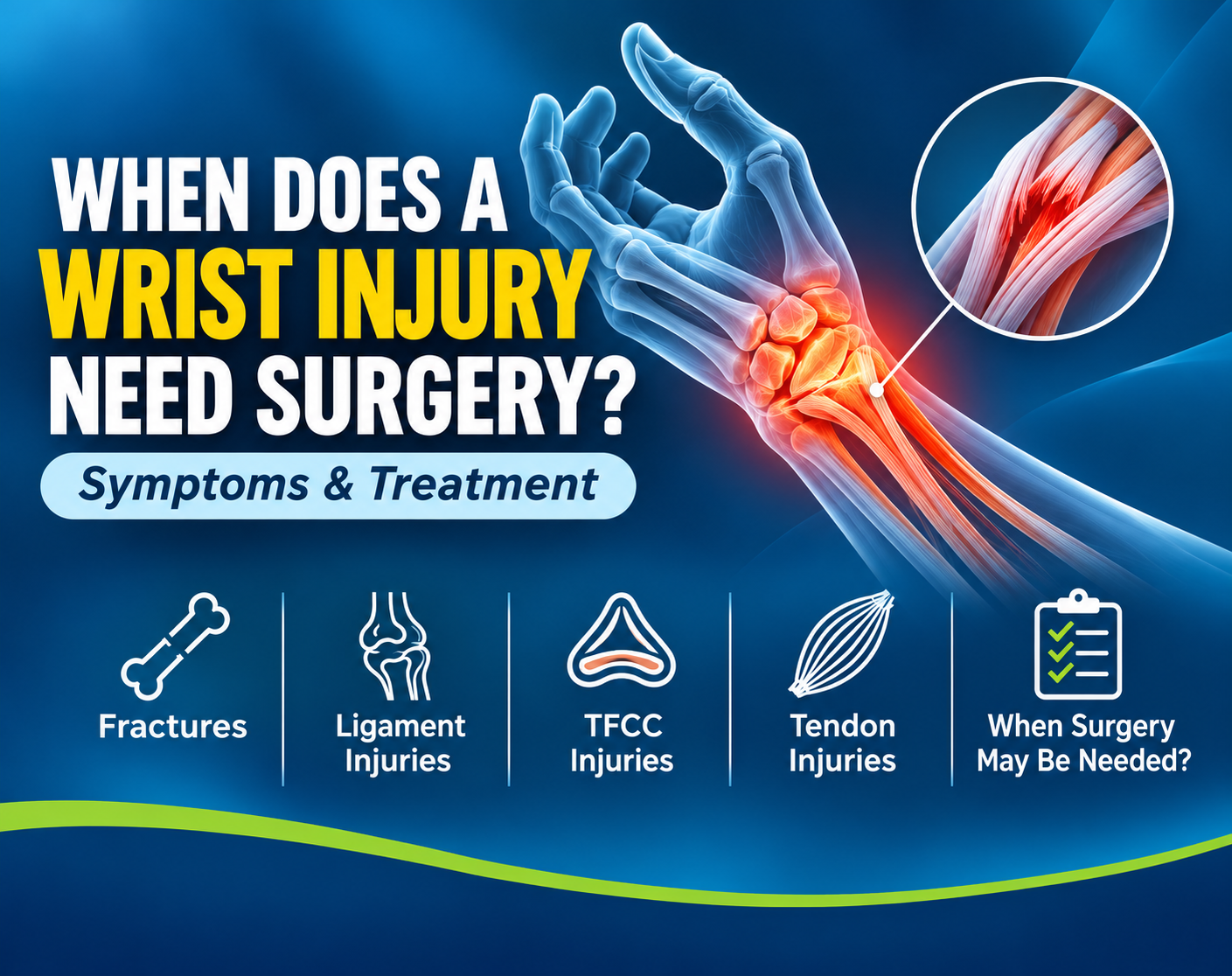
What Are the Common Types of Wrist Injuries?
The wrist is a complex joint made up of several small bones, ligaments, tendons and other soft tissues. An injury to any of these structures can cause pain and restricted movement.
Some common wrist injuries include:
1. Wrist Fracture
A wrist fracture occurs when one or more bones in the wrist break or develop a crack. A common example is a distal radius fracture, which affects the larger bone in the forearm near the wrist.
It often happens when a person falls and tries to break the fall with an outstretched hand.
Common symptoms include:
- Pain and swelling around the wrist.
- Bruising or tenderness.
- Difficulty moving the wrist.
- Pain while gripping or holding objects.
- Visible deformity in some cases.
2. Wrist Ligament Injury
Ligaments connect bones and help keep the wrist joint stable. A sudden twist, fall or impact can stretch or tear these ligaments.
One commonly affected structure is the scapholunate ligament.
Symptoms may include:
- Pain around the wrist, especially during movement.
- Swelling and tenderness.
- Reduced grip strength.
- Clicking or a feeling of instability in the wrist.
Some ligament injuries are mild, while others can affect the stability of the wrist joint.
3. TFCC Injury
The Triangular Fibrocartilage Complex (TFCC) is a structure on the little-finger side of the wrist. It helps support the wrist and stabilise the joint between the two forearm bones.
A TFCC injury may occur due to a fall, twisting movement, repetitive strain or age-related changes.
Common symptoms include:
- Pain on the little-finger side of the wrist.
- Discomfort while rotating the forearm.
- Pain while gripping or lifting objects.
- Clicking or weakness around the wrist.
4. Tendon Injuries
Tendons connect muscles to bones and help control wrist and finger movements. Injuries involving these structures can cause pain, swelling and difficulty moving the hand or fingers.
Depending on the tendon involved and the extent of damage, treatment may range from rest and rehabilitation to surgical repair.
When Does a Wrist Injury Need Surgery?
Not every wrist injury requires an operation. However, surgery may be recommended when the injury is severe, the joint is unstable or the damaged structures are unlikely to heal properly with non-surgical treatment alone.
Here are some situations where wrist surgery may be considered.
1. A Fracture That Is Displaced or Unstable
If a broken wrist bone has moved out of its normal position, the doctor may need to realign it.
Some fractures can be managed with a cast or splint after realignment. However, surgery may be recommended when:
- The broken bone is significantly displaced.
- The fracture is unstable and is unlikely to stay in the correct position.
- The joint surface is affected.
- The fracture involves multiple fragments.
- The bone position cannot be maintained with a cast.
In selected cases, surgery may involve using plates, screws or other fixation devices to hold the bones in the correct position while they heal.
2. A Severe Ligament Tear
A significant ligament tear can affect the stability of the wrist joint.
If the ligament is completely torn or the bones are no longer properly aligned, surgical treatment may be considered.
The decision depends on the ligament involved, the severity of the tear, the patient’s symptoms and the condition of the wrist joint.
3. A TFCC Injury That Does Not Improve
Many TFCC injuries can initially be treated with rest, splinting, activity modification and rehabilitation.
However, if pain and functional problems continue despite appropriate non-surgical treatment, further evaluation may be needed.
In selected cases, wrist arthroscopy or surgical repair may be recommended, depending on the location and nature of the injury.
4. Persistent Pain and Restricted Wrist Movement
Ongoing wrist pain should not be ignored, particularly when it affects daily activities.
If symptoms continue despite appropriate treatment, an orthopedic evaluation may help identify an underlying fracture, ligament injury, cartilage problem or another condition.
Surgery is considered only when the diagnosed problem is likely to benefit from an operation.
5. Open Fractures or Injuries Affecting Nerves and Blood Supply
Some wrist injuries require urgent medical attention.
An open fracture, where the broken bone is associated with a wound in the skin, carries a risk of infection and needs urgent treatment.
Similarly, an injury associated with reduced blood circulation, significant nerve compression or severe deformity requires immediate assessment. Surgical intervention may be necessary depending on the findings.
Can a Wrist Injury Heal Without Surgery?
Yes. Many wrist injuries can heal with non-surgical treatment.
The appropriate approach depends on the type of injury, its severity, the patient’s age, activity level and overall health.
Common non-surgical treatment options include:
1. Rest and Activity Modification
Avoiding activities that put excessive pressure on the injured wrist can help reduce irritation and support recovery.
2. Splinting or Casting
A wrist splint or cast may be used to restrict movement and protect the injured area while it heals.
This is commonly recommended for certain stable fractures and mild to moderate soft-tissue injuries.
3. Medication
A doctor may recommend suitable medication to manage pain and inflammation, depending on the patient’s medical history and condition.
4. Physiotherapy and Rehabilitation
Once appropriate for the injury, guided exercises can help improve wrist movement, strength and flexibility.
Rehabilitation is also an important part of recovery after many wrist surgeries.
5. Regular Follow-Up
Some injuries need follow-up examinations or imaging to check whether the bones and soft tissues are healing as expected.
If the injury is not progressing as anticipated, the treatment plan may need to be reassessed.
What Are the Surgical Treatment Options for Wrist Injuries?
When surgery is necessary, the procedure depends on the injured structure and the extent of damage.
Some commonly used surgical approaches include:
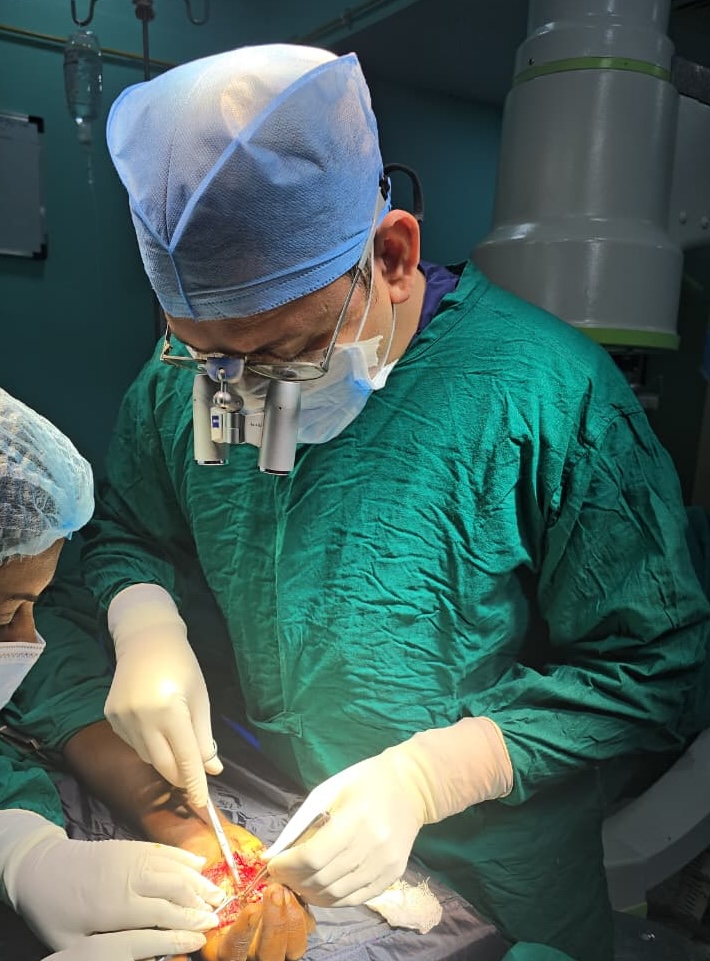
1. Open Reduction and Internal Fixation (ORIF)
ORIF is a procedure commonly used for certain displaced or unstable fractures.
The surgeon realigns the broken bone fragments and uses plates, screws or other fixation devices to hold them in position.
It may be recommended for selected wrist fractures, including some distal radius fractures.
2. Wrist Arthroscopy
Wrist arthroscopy is a minimally invasive surgical technique in which a small camera is inserted into the wrist joint through small incisions.
It allows the surgeon to examine the joint and assess certain injuries involving ligaments, cartilage and other structures.
Depending on the injury, arthroscopy may be used for procedures such as:
- Evaluating and treating selected ligament injuries.
- Managing certain TFCC tears.
- Removing loose fragments of tissue or bone.
- Assessing damage within the wrist joint.
Not every wrist injury is suitable for arthroscopy. The procedure is selected based on the diagnosis and the patient’s condition.
3. Ligament Repair or Reconstruction
When a significant ligament injury causes wrist instability, surgical repair or reconstruction may be considered.
The aim is to restore stability and improve wrist function.
The exact procedure depends on the ligament involved, the extent of damage and how long the injury has been present.
4. Tendon Repair
A completely torn or severely damaged tendon may require surgical repair to restore the affected movement.
The treatment depends on which tendon is injured and the extent of the damage.
What Is the Recovery Time After Wrist Surgery?
Recovery varies depending on the type of injury, the surgical procedure and the patient’s overall health.
Some patients may need a splint or cast for a period after surgery. Others may begin carefully guided wrist movements earlier, depending on the procedure and the surgeon’s advice.
Recovery generally involves:
- Protecting the wrist during the initial healing period.
- Attending scheduled follow-up appointments.
- Following wound-care and activity instructions.
- Starting rehabilitation at the appropriate time.
- Gradually improving wrist movement and strength.
Returning to work, driving, sports or heavy lifting should depend on the injury, healing progress and medical advice.
There is no single recovery timeline that applies to every wrist injury.
Recovery after wrist surgery requires proper care, patience and rehabilitation. Following your surgeon’s instructions can help support healing and restore wrist function.
Want to know how to take care of your wrist after surgery? Read our detailed guide, 5 Tips for Recovery After Wrist Surgery, for practical advice on managing your recovery.
When Should You Consult an Orthopedic Surgeon?
You should seek medical evaluation if you experience:
- Severe wrist pain after a fall or accident.
- Significant swelling or bruising.
- Difficulty moving your wrist or fingers.
- Persistent pain while gripping or lifting objects.
- Clicking or a feeling of instability in the wrist.
- Numbness or tingling in your fingers.
- Pain that does not improve with appropriate care.
Seek urgent medical attention if there is an open wound, obvious deformity, fingers becoming cold or discoloured, or new or worsening numbness or weakness.
Do not try to force the wrist into position or continue using it through severe pain.
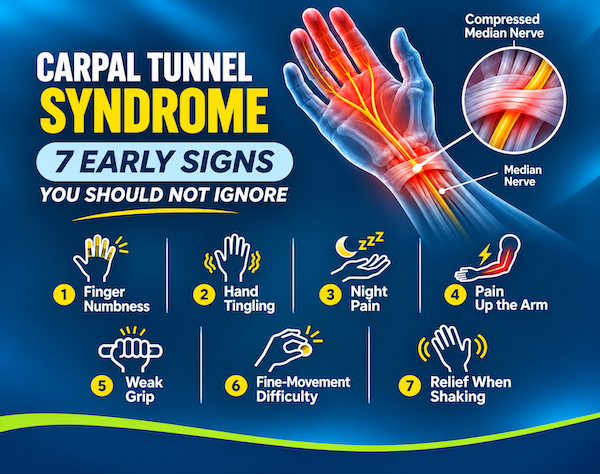
Persistent numbness, tingling or weakness in your fingers may also indicate nerve compression in the wrist. Read our guide on the Early Signs of Carpal Tunnel Syndrome to understand the symptoms and the importance of timely diagnosis.
Frequently Asked Questions About Wrist Injuries
1. How do I know if my wrist injury is serious?
Severe pain, significant swelling, deformity, restricted movement, numbness or difficulty using the hand may indicate a more serious injury. A medical examination and appropriate imaging can help determine the cause.
2. Does every wrist fracture need surgery?
No. Many wrist fractures can be treated with a cast or splint. Surgery may be recommended when the fracture is displaced, unstable, affects the joint surface or cannot be maintained in the correct position.
3. Can a torn wrist ligament heal without surgery?
Some ligament injuries can improve with splinting, activity modification and rehabilitation. However, a complete or unstable tear may require surgical treatment. The decision depends on the specific ligament and severity of the injury.
4. What is wrist arthroscopy?
Wrist arthroscopy is a minimally invasive procedure that uses a small camera to examine and treat selected problems inside the wrist joint. It may be used for certain ligament, TFCC and cartilage-related injuries.
5. How long does it take to recover from wrist surgery?
Recovery depends on the injury and the procedure performed. Some patients may need several weeks of protection, followed by rehabilitation. More complex injuries may take longer to recover.
6. Can I move my wrist if it is injured?
Avoid forcing movement or putting pressure on an injured wrist. If you suspect a fracture or serious injury, keep the wrist supported and seek medical assessment.
7. Which doctor should I consult for a wrist injury?
An orthopedic surgeon can evaluate wrist injuries and recommend appropriate treatment. For complex hand and wrist conditions, an orthopedic surgeon with relevant wrist surgery experience may be particularly helpful.
Consult Dr. Varun Shrimal for Wrist Injury Evaluation in Vashi, Navi Mumbai
A wrist injury can affect more than just your hand movement. It may interfere with everyday activities such as writing, driving, lifting objects and working.
The right treatment begins with an accurate diagnosis. While many wrist injuries can be managed without surgery, some may require surgical intervention to address fractures, ligament damage or joint instability.
Dr. Varun Shrimal, Orthopedic Surgeon in Vashi, Navi Mumbai, evaluates orthopedic conditions and helps patients understand suitable treatment options based on their individual diagnosis.
If you are experiencing persistent wrist pain, swelling, restricted movement or difficulty using your hand after an injury, consider scheduling an orthopedic consultation.


![5 Warning Signs Your Child May Need an Orthopedic Doctor]](http://drvarunshrimal.com/wp-content/uploads/2026/02/5-Warning-Signs-Your-Child-May-Need-an-Orthopedic-Doctor.png)
