
If you spend most of your day typing, clicking, or scrolling, you may have noticed your hand feeling odd. Maybe your fingers fall asleep during a meeting, or your wrist aches by evening. Many people dismiss this as tiredness. But these could be early carpal tunnel syndrome symptoms, and catching them early makes a big difference to treatment.
What Is Carpal Tunnel Syndrome?
Carpal tunnel syndrome (CTS) happens when the median nerve, which runs from your forearm into your hand through a narrow passage in the wrist called the carpal tunnel, gets compressed. This nerve gives feeling to your thumb, index finger, middle finger, and part of your ring finger, and helps control some thumb muscles.
When the tunnel becomes crowded, whether from swelling, repetitive wrist movements, or prolonged awkward wrist positions, the nerve is squeezed. That pressure causes the symptoms below. Desk workers, programmers, designers, accountants, and anyone using a keyboard or mouse for long hours are commonly affected.
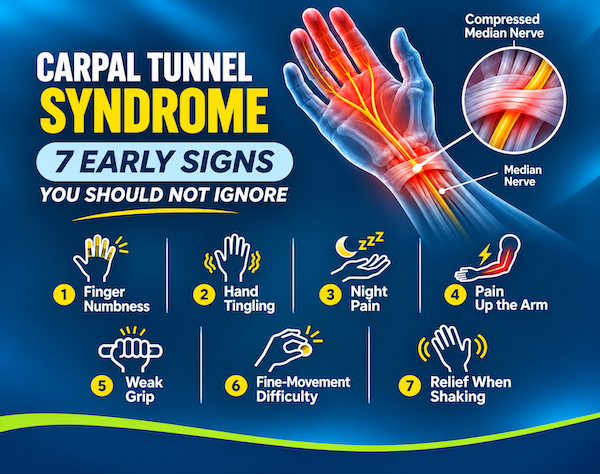
7 Early Signs of Carpal Tunnel Syndrome
1. Numbness in Fingers
The most common early sign is numbness in the fingers, typically the thumb, index, middle, and half of the ring finger. The little finger is usually spared, which is a useful clue. It often appears while typing, holding your phone, or driving, and may come and go at first.
2. Tingling in Hands
A pins-and-needles feeling, like when your foot falls asleep, is a classic symptom. Tingling in the hands may begin after long computer sessions and can feel like a mild electric buzz. If it keeps coming back, your body is telling you something.
3. Hand Pain at Night
Many people first notice hand pain at night. You may wake up with a numb, aching, or burning hand and feel the need to shake it out. This happens because wrists tend to curl while sleeping, which increases pressure on the nerve. Night symptoms are one of the strongest reasons to get checked.
Your sleeping position can also influence carpal tunnel symptoms. Keeping your wrist in a neutral position while sleeping may help reduce pressure on the median nerve. Read our guide on Best Sleeping Positions for Carpal Tunnel Patients to learn how to manage nighttime discomfort.
4. Pain or Burning That Travels Up the Arm
Discomfort isn’t always limited to the wrist. Some people feel an ache or burning sensation that spreads from the palm up the forearm, sometimes reaching the elbow or shoulder.
5. Weak Grip and Dropping Things
If you suddenly find yourself dropping your coffee mug, pen, or phone, or struggling to open a jar, the nerve may be affecting your hand strength. Grip weakness suggests the problem is progressing and shouldn’t be ignored.
6. Clumsiness with Fine Movements
Buttoning a shirt, picking up coins, fastening jewellery, or writing may start to feel awkward. Reduced feeling in the fingertips makes delicate tasks harder.
7. Relief When You Shake Your Hand
If shaking or flicking your hand relieves the symptoms, that is a common pattern in carpal tunnel syndrome. Needing to do this repeatedly through the day is a sign worth noting.
Why Desk Workers Are at Higher Risk
Long hours at a keyboard or mouse often mean wrists held bent, resting on hard edges, or reaching awkwardly for items. Over time, this raises pressure inside the carpal tunnel. Other factors that can contribute include diabetes, thyroid disorders, pregnancy, arthritis, obesity, and previous wrist injuries. Women are affected more often than men.
Simple Desk Habits That Protect Your Wrists
A few small changes can reduce strain:
Keep your desk clutter-free. A tidy desk lets you place your keyboard and mouse close, so you don’t twist or overreach.
Keep wrists neutral. Your wrists should stay straight, not bent up or down, while typing.
Avoid resting your wrists on hard edges. Constant pressure on the underside of the wrist can irritate the nerve.
Take short breaks. Every 30 minutes, stand up, shake out your hands, and gently stretch your fingers.
Check your setup. Keep your chair, screen, and keyboard at heights that let your elbows stay relaxed at roughly a right angle.
These habits help prevent symptoms and can ease mild ones, but they don’t replace medical evaluation if symptoms persist.
When Should You See an Orthopaedic Doctor?
Book a consultation if you notice any of the following:
Numbness or tingling that keeps returning for more than a couple of weeks. Hand pain at night that disturbs your sleep. Weakness in your grip or frequently dropping objects. Visible thinning of the muscle at the base of your thumb. Symptoms that are getting steadily worse.
Not all wrist pain or numbness is caused by carpal tunnel syndrome. Previous wrist injuries, fractures and ligament damage may also contribute to wrist discomfort. Read our blog When Does a Wrist Injury Need Surgery? to understand different wrist injuries and their treatment options.
Early diagnosis often means simpler treatment, such as wrist splints, activity changes, physiotherapy, or medication. Delayed treatment risks lasting nerve damage and may make surgery necessary. A doctor can confirm the diagnosis through a physical examination.
For patients who require wrist surgery, appropriate post-operative care and rehabilitation play an important role in recovery. Explore our 5 Tips for Recovery After Wrist Surgery to understand how to support healing and regain wrist function, following your surgeon’s advice.
Frequently Asked Questions
Can carpal tunnel syndrome go away on its own?
Mild, early cases linked to temporary swelling or activity may settle with rest and workstation changes. Persistent symptoms usually need medical assessment.
Is numbness in the fingers always carpal tunnel syndrome?
No. Neck problems, diabetes, vitamin deficiencies, and other nerve conditions can cause similar symptoms, which is why proper diagnosis matters.
Why is hand pain worse at night?
Wrist position during sleep and fluid shifts when lying down can increase pressure on the median nerve.
Does typing cause carpal tunnel syndrome?
Evidence on typing as a direct cause is mixed, but prolonged awkward wrist positions and repetitive strain can aggravate symptoms in people who are susceptible.
Final Thoughts
Carpal tunnel syndrome rarely appears overnight. It builds slowly, starting with numbness in the fingers, tingling in the hands, or hand pain at night. Listening to these early signals protects your hands, your productivity, and your sleep. If your symptoms persist, don’t wait. Speak to Dr. Varun Shrimal, an orthopaedic specialist and get your wrist checked.





![5 Warning Signs Your Child May Need an Orthopedic Doctor]](http://drvarunshrimal.com/wp-content/uploads/2026/02/5-Warning-Signs-Your-Child-May-Need-an-Orthopedic-Doctor.png)
