
![5 Warning Signs Your Child May Need an Orthopedic Doctor]](https://drvarunshrimal.com/wp-content/uploads/2026/02/5-Warning-Signs-Your-Child-May-Need-an-Orthopedic-Doctor-1021x1024.png)
As a parent, seeing your child hurt or struggling with movement can be worrying. It’s natural to wonder if a limp, pain, or awkward walk is “just a phase” or something more. Many childhood musculoskeletal issues do resolve on their own, but others benefit from early evaluation and treatment by a pediatric orthopedic specialist — someone who deeply understands how children’s bones and joints grow and develop.
In this guide, we’ll walk you through when you should consider consulting an orthopedic doctor, what symptoms to watch for, common conditions in children’s hands and legs, and what to expect from the process. For parents looking for expert guidance, you can also read our detailed guide on how to find the right orthopedic doctor in Vashi to understand what to expect during consultation.
Why Pediatric Orthopedic Care is Different from Adult Care
Children’s bones are not just smaller versions of adult bones — they are growing tissues with special characteristics. Growth plates (the areas where new bone forms) are particularly vulnerable to injury or abnormal development. Problems that aren’t evaluated in childhood can sometimes lead to pain, stiffness, or functional limitations later in life.
That’s why early orthopedic evaluation isn’t “extra care” — it’s smart care. The goal isn’t just to treat pain, but to ensure healthy growth, strength, and mobility.
When should parents see an orthopedic doctor for their child?
Parents should consult an orthopedic doctor if their child has persistent pain, limping, difficulty walking or using hands, visible deformities, or injuries that don’t improve with rest. Early evaluation helps prevent long-term growth and movement problems.
1. Persistent or Recurring Pain
If your child complains of pain in the legs, knees, ankles, hips, elbows, or wrists that lasts beyond a few days — especially after activity — it’s worth seeking evaluation. Children sometimes normalize discomfort or think it’s “no big deal,” but persistent pain can be a sign of underlying issues like overuse injury or early joint stress.
2. Noticeable Limping or Changes in Gait
If your child limps, walks unevenly, or suddenly starts favoring one leg or foot, it’s time for an assessment. These changes may follow an injury, but they can also suggest growth plate irritation, muscle imbalance, or alignment concerns.
3. Difficulty with Everyday Functions
Simple tasks like gripping a pencil, catching a ball, climbing stairs, or even sitting comfortably may reveal something amiss when they become painful or difficult. Hand function problems — like difficulty with writing, buttoning clothes, or holding objects — are also signs to watch.
4. Visible Deformity or Uneven Growth
Sometimes the difference is obvious — a toe that turns inwards, a foot that looks twisted, bowed legs, or fingers that are fused or misshapen. While not all differences need surgery, they do need expert assessment to determine the best course of care.
5. Injuries That Don’t Improve with Rest
Kids are active, and bumps and bruises are part of growing up. Most falls heal with rest and ice. But if swelling and pain persist, if the limb remains tender days later, or if the child refuses to use a limb, professional evaluation can rule out fractures, ligament injuries, or deeper problems.
6. Frequent Sprains or Fractures
If your child keeps getting injured again and again, it could be due to weak muscles or improper movement. An orthopedic doctor can identify the reason and correct it early.
Common Pediatric Orthopedic Problems in Children
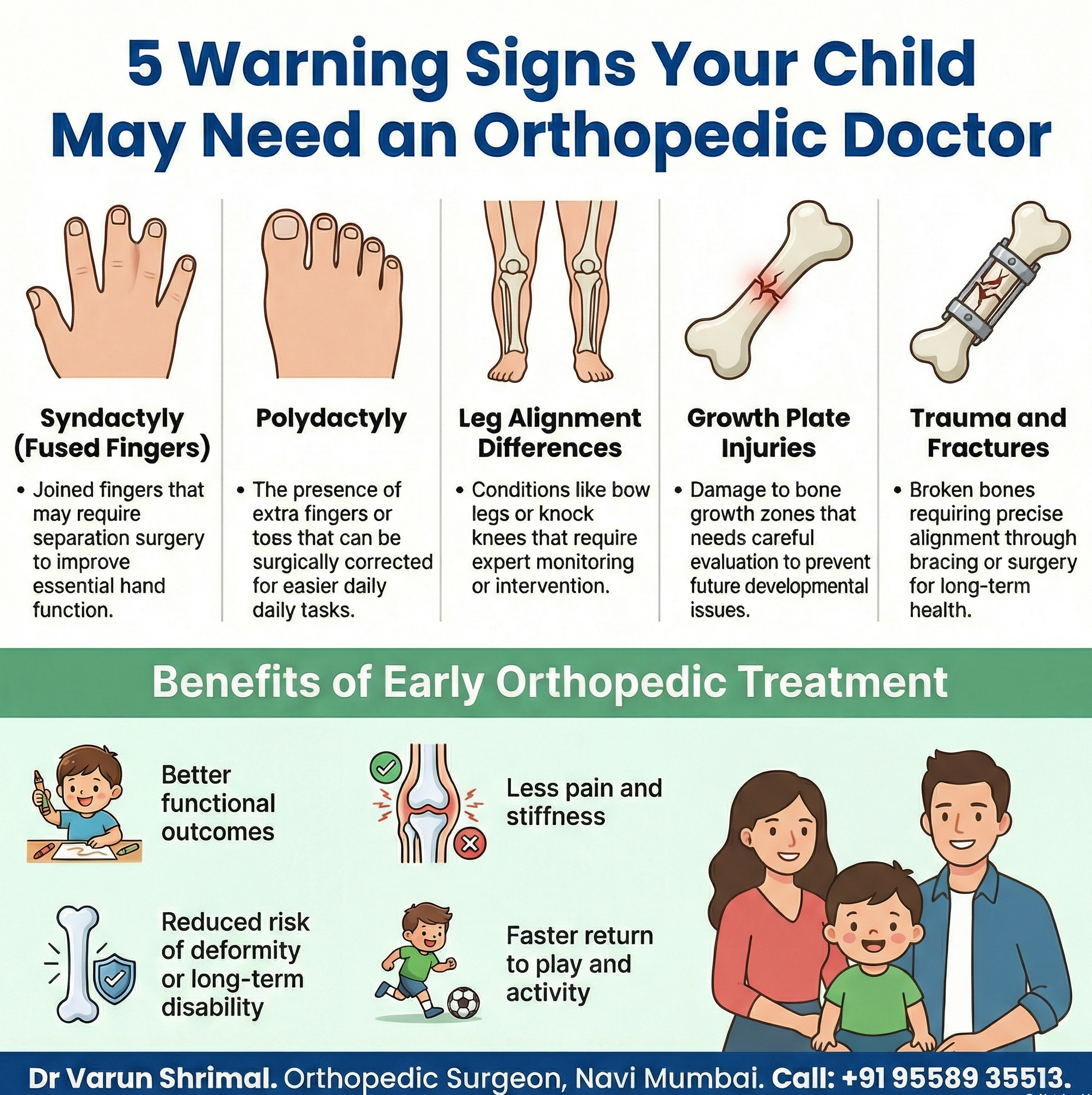
Syndactyly (Fused Fingers)
This is a condition where two or more fingers are joined together. Early separation surgery can help improve hand function. Learn more about congenital hand deformities, treatment methods, and surgical correction options here.
Polydactyly (Extra Digits)
Extra fingers or toes may not affect function, but surgical correction can make everyday tasks easier.
Leg Alignment Differences
Conditions like bow legs or knock knees often improve as a child grows, but sometimes require observation or intervention if severe.
Growth Plate Injuries
Injuries near growth plates, especially after falls or sports activity, need careful evaluation because they can affect future bone growth. Sports-related sprains or tendon injuries are common in active children. Read about tendon and ligament tear treatment options to understand early care.
Trauma and Fractures
Broken bones in children often heal well, but some require bracing or minor surgery to ensure proper alignment and long-term function.
Signs Your Child Needs an Orthopedic Check-up
- Persistent pain or swelling
- Limping or uneven walking
- Difficulty using hands or gripping objects
- Visible deformity in arms or legs
- Injuries that don’t heal within a few days
Benefits of Early Orthopedic Treatment
Early intervention often translates into:
- Better functional outcomes
- Less pain and stiffness
- Reduced risk of deformity or long-term disability
- Faster return to play and activity
When parents bring concerns early, treatment can be simpler and more effective.
Protecting Joints and Movement at Home
Parents can also support healthy movement through:
- Encouraging safe play and warm-ups
- Ensuring proper footwear
- Keeping a balanced diet with calcium and vitamin D
- Avoiding prolonged high-impact activities without rest
Simple steps can complement professional care.
Final Thoughts
We all want our child should run, jump, play, write, and explore the world, but sometime little deformity can block simple living. Every ache does not need a clinic visit, but persistent pain, difficulty moving, or obvious limb deformities deserve attention.
Don’t wait for a condition to worsen. Early evaluation with an orthopedic specialist helps protect your child’s growth, comfort, and lifelong movement.